
Security Screens vs Cyclone Shutters for North Queensland Homes
Author
Date
Security screens and cyclone shutters do different jobs. Security screens protect your home every day while letting air and light in. Cyclone shutters are closed ahead of severe weather to shield glass from wind and flying debris. At Townsville Windows and Screens, we install both across Townsville and North Queensland, and many homes end up with a combination of the two. This guide sets out the practical differences so you can work out what suits your home, your priorities and your budget.
Key Takeaways
- Security screens give year-round security, airflow and visibility. Cyclone roller shutters form a solid barrier over windows and doors during severe weather.
- Some security screens are specifically engineered and tested for cyclone conditions, but not all. Crimsafe cyclone debris screens are designed for this, while standard security screens may not be.
- Closed cyclone shutters block light and airflow. Security screens keep the house open and ventilated in normal weather.
- No screen or shutter replaces following official cyclone warnings and preparation advice.
Security Screens Vs Cyclone Shutters: The Short Answer for North Queensland
The short answer is that security screens are everyday protection and cyclone shutters are event-based protection. Townsville homeowners deal with heat, humidity, wet-season storms and the risk of break-ins, and each product handles a different part of that.
- Security screens stay in place on doors and windows all year. They deter forced entry, keep insects out and let the breeze through.
- Cyclone roller shutters sit rolled up most of the time and are closed before severe weather to protect glass from high winds and flying debris.
Lean towards security screens when daily security, ventilation and natural light are your main concerns. Consider cyclone shutters for exposed openings and large areas of glass you want protected during storms. Many homes in suburbs like Kirwan, Douglas and Bushland Beach use security screens on most openings and shutters on a few of the most exposed ones.
What Are Security Screens? (Including Cyclone Debris Screens)
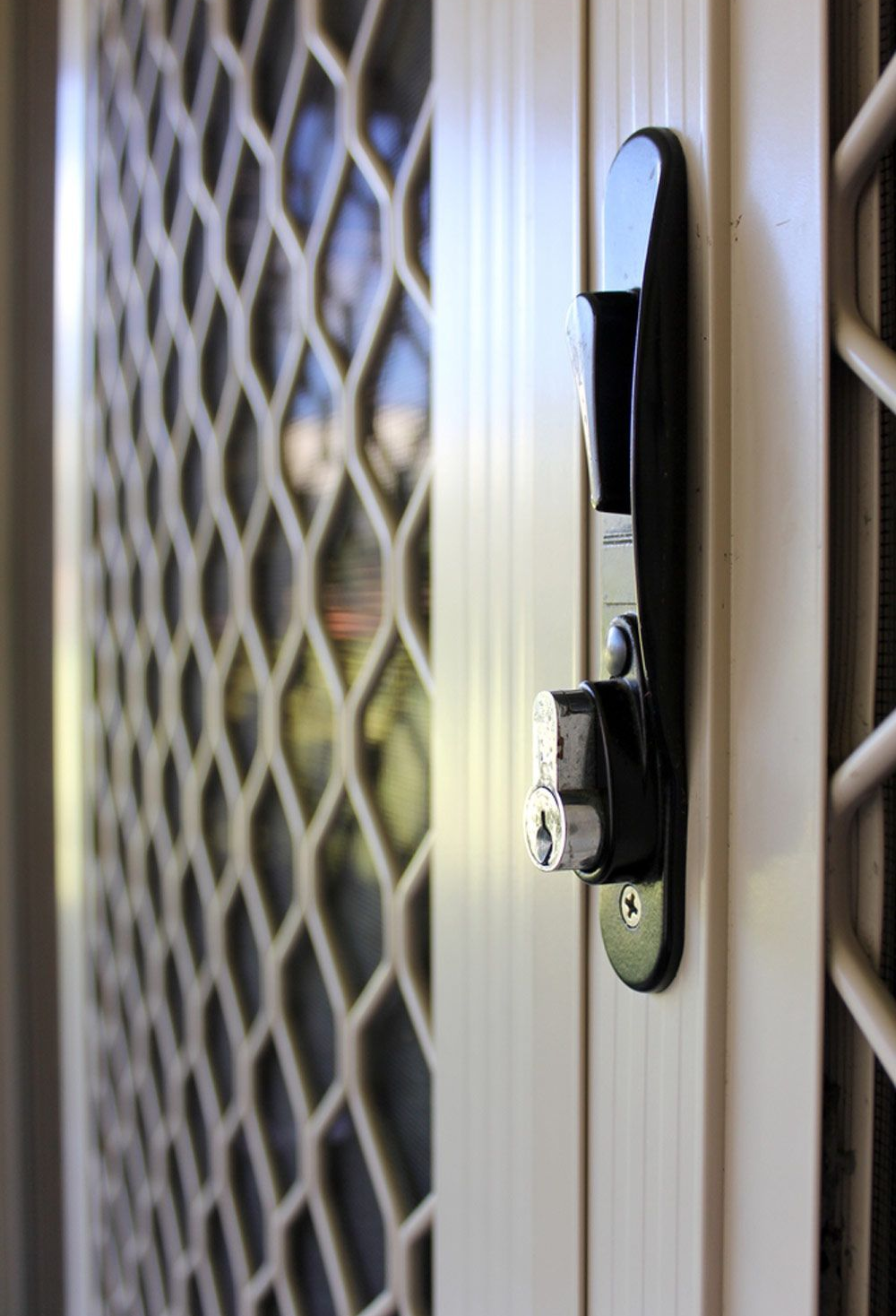
Security screens are reinforced mesh screens fixed over doors and windows to resist break-ins while letting air and light through. They're a big step up from fly screens, which only keep insects out.
A typical security screen includes:
- A heavy-duty frame
- High-strength stainless steel mesh
- Secure fixing into the building structure
- Quality locks and hardware on doors
For homes near the coast, mesh grade matters. Marine-grade 316 stainless steel resists salt air better than standard grades.
Townsville Windows and Screens are authorised Crimsafe specialists, and the Crimsafe range includes cyclone debris screens designed for cyclone conditions. The key point is that not every security screen on the market is cyclone rated. A standard security screen is designed for intrusion resistance and a cyclone debris screen is designed for debris impact, so they shouldn't be treated as the same thing.
Because security screens stay fixed in place, they protect your home whether you're there, at work or away. For more on protecting the house while it's empty, read our tips on keeping your home safe while you're away.
What Are Cyclone Roller Shutters?
Cyclone roller shutters are heavy-duty shutters that roll down over windows, and sometimes doors, to protect them from strong winds and wind-borne debris. They're made from interlocking slats that run in side guides and roll up into a headbox when not in use. Depending on the product, they're operated manually or with a motor.
In normal weather, shutters sit rolled up and out of the way. They need to be closed before a storm arrives, which means someone has to be home and able to do it safely.
When closed, cyclone shutters block light and airflow. Depending on how you use the room, that can be useful, because a closed shutter darkens the room, adds privacy and can help with afternoon heat. It can also be a drawback if you want to keep views and ventilation. Products vary, so check what each one is designed to handle before you buy.
Townsville Windows and Screens supplies CycloneSafe cyclone roller shutters. You can read more about our cyclone roller shutters in Townsville.
Home Security: Everyday Protection Vs Event-Based Barriers
Security screens protect your home every day, while cyclone shutters only add meaningful security when they're closed. Think about a normal week in Townsville. You leave windows cracked for air while you're at work, you're out in the backyard on the weekend, and the house may sit empty over the holidays.
Security screens on entry doors and accessible windows are always in place and always locked. You can leave a door open for the breeze and still have a secure barrier between you and the street.
Cyclone shutters are usually left open for daylight and views, so most of the time they do little to deter break-ins. If everyday security is your main priority, security screens are usually the place to start, with shutters added where storm protection is the main concern.
Extreme Weather: Cyclone Categories, Debris and Realistic Expectations
North Queensland is cyclone country, and the biggest risk to most homes in a severe storm is flying debris breaking windows. Once a window breaks, wind and rain can get inside quickly and cause serious damage to the room and the building.
It helps to be clear about what each product is designed to do:
- Cyclone debris screens , such as those in the Crimsafe range, are designed to resist wind-borne debris while still letting some light and air through. Rain can still pass through mesh, so they won't keep water out.
- Cyclone roller shutters form a solid barrier when closed, protecting the glass and limiting wind and rain hitting the opening directly.
Always check whether a product is designed for cyclone conditions rather than assuming any screen will cope. No screen or shutter makes a home cyclone proof. Follow official warnings, evacuation advice and preparation checklists. These products are part of your plan, not a replacement for it.
Light, Airflow and Interior Comfort
Security screens keep a Townsville home open, bright and ventilated, while closed shutters shut a room down. On a hot, humid evening in Aitkenvale or Annandale, being able to open the doors and windows securely makes a real difference.
Quality security screens let you leave windows and doors open with insects kept out and cross-breezes still moving through the house. They keep your views and let natural light in. They are a breathable barrier rather than a sealed one.
Cyclone shutters have little effect on light when rolled up. Closed, they block most light and air, but they can help keep heat and street noise out of certain rooms.
A practical approach is security screens on most openings to keep the house feeling open, and cyclone shutters on the few windows that cop the worst storm exposure or afternoon sun.
Aesthetic Appeal and Street Presence
Security screens blend in more easily, while cyclone shutters add visible hardware to the outside of the house. Most Townsville homeowners want stronger security and storm protection without their home looking like a bunker.
Modern stainless steel mesh screens can be colour-matched to your frames and trims, so they sit neatly on front-facing doors and windows. Cyclone shutters add a headbox and side guides, and give the house a more solid look when closed. That suits some homes and less visible elevations better than others.
Think about where you're comfortable seeing shutters and where screens would keep the street view tidier. If you're weighing up style, see our tips for customising security screens to suit your home's design.
Practical Use, Maintenance and Everyday Convenience
Security screens are largely set and forget, while cyclone shutters need someone to close them in time. The best system is the one you'll actually use properly before bad weather and live with comfortably the rest of the year.
- Security screens: security screens require minimal maintenance, usually just cleaning with mild soap and water. Rinse more often near the coast to clear salt.
- Cyclone shutters: tracks and slats should be checked and cleaned so they run smoothly. Test them before each wet season, not on the day a cyclone is forecast.
Think about who in your household will close the shutters, how quickly they can do it and whether every window is easy to reach. If closing shutters safely in time would be difficult, permanently fixed screens may be a better fit for some openings.
Where Each Option Works Best Around a Typical North Queensland Home
The right answer is usually a room-by-room mix rather than one product everywhere. As a general guide:
- Front entry doors: security screens, for year-round security, airflow and visibility
- Sliding doors to patios: security screens, because they're a common access point and need daily ventilation
- Accessible ground-floor windows: security screens to deter break-ins and keep air moving
- Large windward-facing glass: cyclone shutters, for the openings most exposed to storms
- Picture windows and large panes: cyclone shutters, to protect large areas of glass
- Rooms you'd shelter in during a cyclone: cyclone shutters or cyclone debris screens
Every home is different. Elevation, nearby trees and the direction the house faces all affect the best combination, so an on-site assessment beats guessing.
How to Choose: Budget, Priorities and Long-Term Value
Start by ranking what matters most to you, because that decides how your budget is best spent:
- Everyday security against break-ins
- Cyclone protection for exposed openings
- Heat, light and noise control
- Privacy and ease of use
- Long-term durability
Costs vary with the size and number of openings, the products chosen and the installation, so the only reliable figure is a quote for your home. As a general rule, security screens let you cover more openings for everyday protection, while cyclone shutters are often kept for a smaller number of high-risk windows.
Think about how often you'd realistically close shutters each year compared with how often you'd use screens for security and ventilation on hot nights. Factor in any renovation plans too, so your choice still makes sense down the track.
Why Work with Townsville Windows and Screens
Townsville Windows and Screens is locally owned and operated and has been serving North Queensland since 1988. We're QBCC licensed and focus on security solutions that suit Townsville's heat, humidity and cyclone season.
As authorised Crimsafe specialists, we install Crimsafe security screens and cyclone debris screens, along with CycloneSafe cyclone roller shutters. That means we can recommend whatever combination suits your home rather than pushing one product, whether you're in the city, out at Deeragun or down towards Ayr and Home Hill.
Next Steps: Get Personalised Advice and a Free Measure and Quote
The best next step is an on-site visit. We offer a free measure and quote on security screens, Crimsafe cyclone debris screens and CycloneSafe cyclone roller shutters, with no pressure and no obligation.
During the visit, we'll look at your doors and windows, talk through your weather exposure and security concerns, and recommend the combination that suits your home. No product can remove cyclone risk entirely, but the right setup can improve both everyday safety and your readiness for the wet season. Call (07) 4725 6044 to book.
Frequently Asked Questions
Do all security screens provide cyclone protection?
No. Many security screens are designed for security and insect protection, not for resisting cyclone debris. If you want both, look for screens designed and tested for cyclone conditions, such as Crimsafe cyclone debris screens, and ask your supplier to confirm which products suit cyclone use.
Can I use cyclone shutters instead of boarding up my windows?
Cyclone shutters can be part of your cyclone plan and may reduce the need for temporary boarding on the openings they cover. Still follow official cyclone advice for any openings that aren't protected, and organise everything well before the wet season.
Will security screens or cyclone shutters affect my insurance?
Policies vary, so speak directly with your insurer about how security or cyclone products may affect your cover or premium. An installer can't promise any change to your insurance.
Are cyclone shutters noisy or hard to use in strong winds?
Shutters should be closed and secured before conditions become dangerous. Operating them in very high winds isn't safe. Well-installed shutters sit firmly in their guides, although some noise is normal in a severe storm. Checking them before cyclone season helps make sure they run smoothly when you need them.
How do I decide which windows need cyclone shutters and which only need security screens?
Prioritise large glass, windward walls and the rooms you'd shelter in for shutters or cyclone debris screens, and use security screens on other doors and accessible windows. Book a free measure and quote with Townsville Windows and Screens on (07) 4725 6044 and we'll recommend a combination for your home.
Recent Posts